
Most women get steady, structured care through their childbearing years. There is a yearly exam, a clear set of screenings, and someone whose job it is to ask the next question. Then, somewhere around perimenopause and menopause, that structure disappears. Care fragments across gynecology, primary care, and whichever specialist happens to be closest to the symptom in front of them. Nobody owns the whole picture anymore.
The gap after 50
Where does the gap in women’s care lead?
I saw where that gap leads during my years as a hospitalist. Women would arrive in their seventies and eighties with a hip fracture after a fall, or sepsis from a urinary tract infection that had been recurring for years.
These were not unusual cases. They were the predictable result of screenings that never happened and symptoms that got waved off as “just part of aging.”
Three parts of that gap come up often enough that they deserve their own explanation: bone health, recurrent urinary tract infections, and hormone therapy.
When should women get a bone density scan?
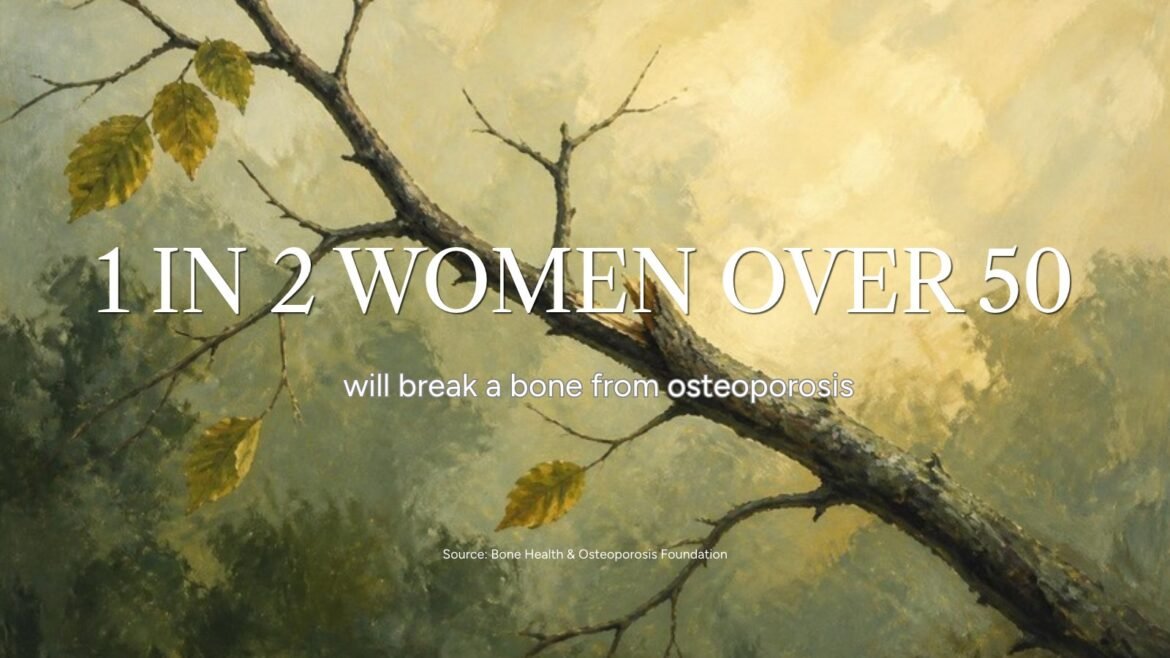
About one in two women over 50 will break a bone due to osteoporosis (Bone Health & Osteoporosis Foundation). Bone loss after menopause is common, and it is often silent until a fracture happens.
The U.S. Preventive Services Task Force recommends bone density screening (a DEXA scan) for all women starting at 65, and for postmenopausal women younger than 65 who are at increased risk based on a clinical risk assessment (USPSTF, JAMA 2025). A fracture from a fall that could have been prevented with a bone density scan and the right treatment is one of the more avoidable outcomes I saw in the hospital.
If you are over 50 and cannot remember the last time anyone discussed a DEXA scan with you, that is worth raising at your next visit. I wrote more about timing in what women should ask about bone, heart and brain health in their 40s and 50s.
Why do UTIs keep coming back after menopause?
Recurrent urinary tract infections become more common after menopause, largely because of the drop in estrogen in the genitourinary tissue. Many women are told to simply expect this, or are treated with repeated rounds of antibiotics without anyone addressing the underlying cause.
In fact, one of the most effective primary prevention strategies for UTIs in postmenopausal women is vaginal estrogen! I recently went to a Maryland Women’s Health Commission briefing, and one doctor said “call it sepsis prevention cream” if the word “vagina” is not moving the needle.
The joint guideline from the American Urological Association, the Canadian Urological Association, and the Society of Urodynamics, Female Pelvic Medicine & Urogenital Reconstruction recommends that clinicians offer vaginal estrogen to peri- and postmenopausal women with recurrent UTIs, when there is no contraindication (AUA/CUA/SUFU). It is a low-risk, local treatment, and it is underused.
How should hormone therapy decisions be made?
Hormone therapy is one of the most misunderstood tools in midlife care, partly because the conversation has swung between overuse and near-total avoidance over the past two decades. The Menopause Society’s position statement calls for treatment to be individualized, matching the type, dose, formulation, and duration of hormone therapy to each woman’s symptoms and personal risk profile, with periodic reevaluation over time (The Menopause Society, 2022).
That conversation takes time. It is not something that fits into a ten-minute visit at the end of a long day. You can read why I believe menopause care still falls short.
What should I ask my doctor after 50?
- Bone: Have I had a bone density scan? Do my risk factors mean I should have one before 65?
- Bladder: I keep getting UTIs. Have we talked about vaginal estrogen?
- Hormones: Is hormone therapy worth revisiting for me, based on my symptoms and my own risk profile?
What does continuous primary care do differently?
The common thread in all three of these is continuity. Bone density screening, recurrent UTI prevention, and hormone therapy decisions all depend on someone tracking your health over years, not just responding to whatever symptom brought you in that day. In a direct primary care model, I can see that whole picture: your bone health, your cardiovascular and metabolic risk, your hormone therapy options, and the day-to-day symptoms that brought you in, all in the same conversation, with the time to actually have it.
None of this requires a specialist referral to start. It requires a primary care visit where someone is looking far enough ahead to ask. You can read more about how membership works.
Frequently asked questions
Does bone density screening really need to start at 65?
The USPSTF recommends screening starting at 65 for most women, and earlier for postmenopausal women with risk factors identified through a clinical risk assessment. Ask your primary care physician whether your personal risk factors call for earlier screening. If I meet a patient in clinic who is high risk or has a strong family history of osteopenia or osteoporosis, I will recommend a DEXA scan earlier, and I have negotiated cash pricing down the road to get it done whether the insurance company says yes or no.
Can vaginal estrogen help with recurrent UTIs after menopause?
Yes. The AUA/CUA/SUFU guideline recommends vaginal estrogen as a first-line option for reducing the frequency of recurrent UTIs in peri- and postmenopausal women. It is a local, low-dose treatment, distinct from systemic hormone therapy. Why aren’t all of our grandmothers and mothers being offered it? Because these are new guidelines. We need to spread the word.
Is hormone therapy safe after menopause?
The Menopause Society’s position statement supports individualized decisions about hormone therapy based on a woman’s symptoms, how long it has been since menopause, and her personal health history. This is a conversation to have with a physician who knows your full history, not a blanket yes or no.
Why does women’s preventive care often fall off after 50?
Care that was once structured around reproductive-years visits often fragments after menopause across gynecology, primary care, and specialists, with no one clearly responsible for ongoing screening. Continuous primary care is designed to close that gap.
Primary care that looks ahead
If you’re in the Bethesda area and looking for a more thoughtful approach to primary care after 50, you can schedule a free discovery call.
Schedule a discovery callReferences
- Bone Health & Osteoporosis Foundation. What Women Need to Know. Link
- US Preventive Services Task Force; Nicholson WK, et al. Screening for Osteoporosis to Prevent Fractures. JAMA. 2025;333(6):498-508. Link
- American Urological Association, Canadian Urological Association, SUFU. Recurrent Uncomplicated Urinary Tract Infections in Women: AUA/CUA/SUFU Guideline (2019, amended 2022 and 2025). Link
- The 2022 hormone therapy position statement of The North American Menopause Society. Menopause. 2022;29(7):767-794. Link
This article is for general education and is not medical advice for your situation. Please talk with your own physician about your care.